Do Termites Go Away in Winter? What Houston Homeowners Should Know
When the weather cools off, a lot of homeowners figure termites take the season off. You don’t see swarms, you don’t see wings on the windowsill, and it’s easy to assume the problem went away with the heat. In Houston, it didn’t. Our winters are mild, and the termites that cause the most damage here keep working the whole time, just out of sight.
KEY TAKEAWAYS
- Termites don’t go away in a Houston winter. Eastern Subterranean and Formosan termites keep feeding year-round.
- Winter feels quiet because there are no swarms. Swarms happen in spring, not because termites wake up then.
- Mud tubes, hollow-sounding wood, and bubbling paint are signs to watch for any time of year.
- Firewood stacked against the house, moisture, and wood touching soil all raise your risk.
- Winter is a great time to schedule a FREE termite inspection, but there’s never a bad time to have your home inspected for termites.
Why Termites Stay Active in a Houston Winter
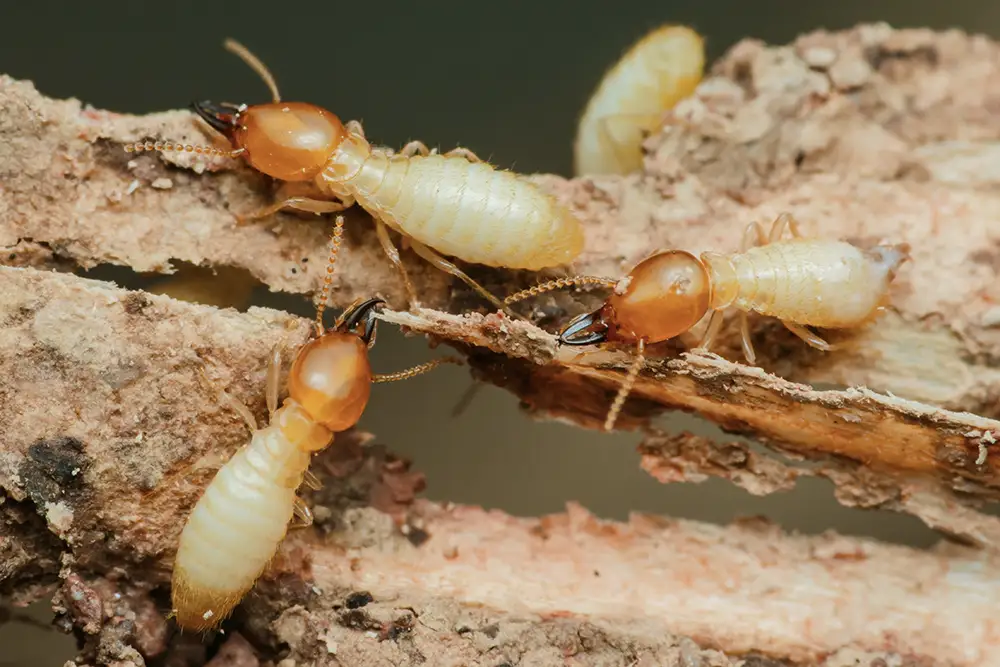
The two species we deal with most in the Houston area are Eastern Subterranean termites and Formosan termites. Both are active year-round here. Formosan termites are especially aggressive, with much larger colonies that can do serious damage in less time.
Why Winter Feels Quiet (and Why That’s Misleading)
Most people only notice termites when they swarm. A swarm is when winged termites leave an established colony to start new ones, and in Houston that happens in spring: Eastern Subterranean termites from late February through April, and Formosan termites around May and June. No swarms in winter doesn’t mean no termites. It just means termite activity is continuing out of sight.
Signs of Termites to Look For This Winter
- Avoid breaking open mud tubes before an inspection: they provide valuable evidence that helps our licensed inspectors identify termite activity and determine the appropriate treatment.
- Damaged or hollow-sounding wood: wood that sounds hollow when you tap it, or crumbles when you press on it
- Bubbling or peeling paint: this can be a sign of moisture or termite damage underneath
- Doors and windows that suddenly stick: termite damage can warp frames
- Discarded wings near windows and doors: usually a spring sign, but wings left behind from an earlier swarm can point to a colony nearby.If you spot any of these, don’t break open the mud tubes or spray the area yourself. It can scatter the colony and make the problem harder to find.
What Raises Your Risk in the Cooler Months
- Firewood stacked against the house. It’s convenient on a cold night, but it gives termites a direct path to your walls. Store it at least 20 feet from the house and off the ground.
- Moisture. Leaky pipes, clogged gutters, and poor drainage keep the soil around your foundation damp, which termites love.
- Wood touching soil. Fence posts, porch steps, and siding that touch the ground make it easy for termites to move in.
- Mulch piled against the foundation. It holds moisture and hides termite activity.
- Crawlspaces in older homes. Many homes in neighborhoods like the Heights, Timbergrove, and Montrose sit on pier-and-beam foundations, which give termites more access points to check.
Why Winter Is a Smart Time for a Termite Inspection
Termite damage builds slowly and quietly, and it usually isn’t covered by homeowners insurance. Catching activity in winter means you can deal with it before spring swarm season, when colonies send out new swarmers looking for a place to start. An inspection also gives you a clear picture of your home’s risk factors, so you know exactly what to fix.